
Psychologist • Author • Speaker
Creator of the Effigism Model
Read My Personal Story of Recovery Here:
I’m Todd Berntson, M.A., D.C., Psy.D., a Minnesota-based therapist, relationship coach, author, speaker, and educator specializing in relational trauma, emotional attachment, shame, identity, emotional regulation, and the long-term effects of psychologically harmful relationships.
For more than two decades, my work has centered on a basic question: How do the relationships and experiences that shape us early in life continue to influence who we become—and how do we recover when that shaping has been harmful?
Through clinical work, workshops, presentations, writing, and media, I have helped thousands of people understand the origins of their emotional struggles, develop a more stable sense of self, and build healthier, more resilient relationships.
The Concept of Effigism
In recent years, much of my work has focused on a pattern of emotional cruelty that I came to believe was not adequately described by the psychological language available to us.
I call that pattern Effigism.
Effigism describes what happens when one person manages a disowned wound to the self by organizing another person into a diminished, defective, dependent, ridiculous, shameful, or failed position. The other person becomes the weak one, the foolish one, the needy one, the unstable one, the incompetent one—the person who cannot seem to get life right. As long as that person remains in the failed position, the enactor is protected from confronting something painful or threatening within themselves.
My work on Effigism grew out of decades spent studying trauma, attachment, relationships, shame, identity, and the ways people regulate difficult emotional states through other people. It also emerged from listening closely to people who had spent much of their lives feeling that someone close to them somehow needed them to remain small.
I am currently developing the theoretical and research foundation of Effigism for both professional and general audiences. Three academic papers examining the construct have been submitted for publication in peer-reviewed journals, and my current book project explores Effigism, the failed state it can produce in those who grow up within these relationships, and the process of recovery.
Trauma, Addiction, and Relationships
Effigism is part of a broader body of work I have pursued throughout my career.
I have long been interested in the ways emotional trauma changes how we experience ourselves, other people, and the world around us. Trauma does not simply leave painful memories behind. It can influence whether we feel safe, whether we trust our own perceptions, whether we believe we matter, how much agency we experience in our lives, and what we expect from close relationships.
These injuries often show up later in life as emotional reactivity, shame, self-doubt, people-pleasing, difficulty trusting, unstable relationships, compulsive behavior, addiction, or the persistent feeling that something about us is fundamentally wrong.
My work helps people understand these patterns not simply as symptoms to eliminate, but as adaptations with histories. When we understand where those adaptations came from, we are in a much stronger position to change them.
This perspective also informs my work in addiction and recovery. Recovery involves far more than stopping a substance or behavior. For many people, long-term recovery requires learning how to regulate emotions, tolerate vulnerability, develop a coherent sense of self, form healthy attachments, and build relationships that no longer reproduce the emotional conditions from which addiction once provided relief.
Author
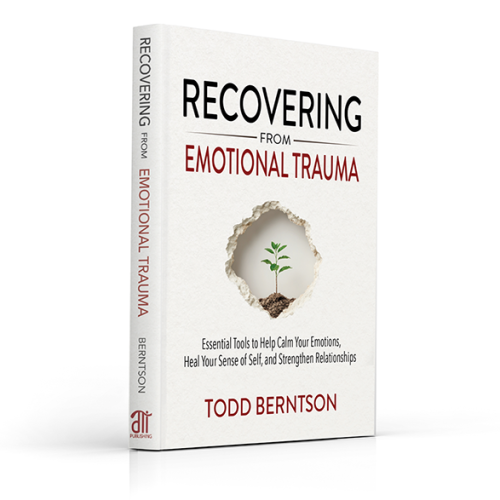
I am the author of Recovering from Emotional Trauma: Essential Tools to Calm Your Emotions, Heal Your Sense of Self, and Strengthen Relationships (2025), a practical guide to understanding the effects of emotional trauma and developing the skills necessary for recovery.
The book received a 2026 Silver Award from the Nonfiction Book Authors Association and was named a 2026 Eric Hoffer Book Award Finalist.
My first book, Why Do I Keep Doing That?: How to Free Yourself from the Bondage of Self-Destructive Emotions and Behaviors, was published in 2003.
Across my writing, I try to bring psychological theory, clinical observation, scientific research, and lived human experience together in language that people can actually use. I am less interested in giving people another label than in helping them understand the mechanisms beneath what they are experiencing—and what they can do about them.
“This is a compelling and deeply personal guide to emotional healing. Dr. Berntson skillfully blends his own story of addiction and recovery with clear, evidence-based strategies for overcoming trauma.”
– Nonfiction Book Authors Association

Speaker and Educator
I have given hundreds of lectures, workshops, and presentations for universities, professional associations, treatment and recovery communities, trade organizations, and general audiences.
My current speaking work focuses on Effigism, trauma and addiction, and relationships in recovery, including my keynote presentation, Effigism: Being Raised to Fail.
I am a member of the National Speakers Association and the Minnesota Speakers Association.
I am a member of the National Speakers Association, the Minnesota Speakers Association, and the International Centre for Excellence in Emotionally Focused Therapy.
Media and Public Education
An important part of my work is bringing psychological ideas outside of the therapy office and into public conversation.
I host The Dr. Todd Show on YouTube, where I discuss Effigism, relational trauma, emotional recovery, addiction, and relationships for a growing international audience. The program currently reaches an average monthly audience of approximately 100,000 viewers.
My work and commentary have also appeared on Minnesota Public Radio, in The Boston Globe and The Washington Post, and on a variety of podcasts and other media.
I am available for interviews, podcasts, expert commentary, and conversations involving Effigism, relational trauma, emotional abuse, addiction and recovery, attachment, and relationships.
Education and Professional Training
My educational background includes doctoral training in clinical psychology as well as graduate and professional education in chiropractic, nutrition science, and related areas of health and human behavior. I have had years of postgraduate training in emotionally-focused couple therapy, and have been actively involved in 12-step programs for 42 years.
That multidisciplinary background has shaped the way I think about emotional health. Human beings are not collections of isolated symptoms. What happens psychologically also happens physiologically, relationally, behaviorally, and socially. Effective healing requires understanding how those systems interact.
My professional perspective has also been shaped by lived experience.
I know what it is like to experience trauma, addiction, recovery, and the difficult work of rebuilding a life and sense of self. That experience informs my work, but it is not the subject of this page. If you would like to know more about the personal journey that brought me here, I have written about it separately.
The Work Ahead
Whether I am writing, speaking, teaching, making a video, or sitting with someone trying to understand what happened to them, my goal is essentially the same:
to give people language for experiences they have struggled to name, help them understand the psychological mechanisms beneath those experiences, and show them that meaningful change is possible.
Effigism is the newest expression of that work—and the work I expect to be pursuing for many years to come.
Interested in bringing me to your organization, program, conference, podcast, or event?